Fronde et Fonce℠
Rattling Rails and Shaving Shortcuts
Fronde et Fonce’s foundational principals are rooted in the journey Karine traveled as she competed on France’s junior national circuit, where her unconventional lines, aggressive turns, and exacting preparations became distinguishing features of her riding. This gallery documents those years through photographs that survived a house fire. Through Karine’s firsthand recollections of the moments, she explains the decisions she made, course reconnaissance, stride selection, approach angles, changing footing, and the judgement required to recognize when an opportunity was worth taking. It is this competitive experience and horsemanship she now brings to her apprentices.
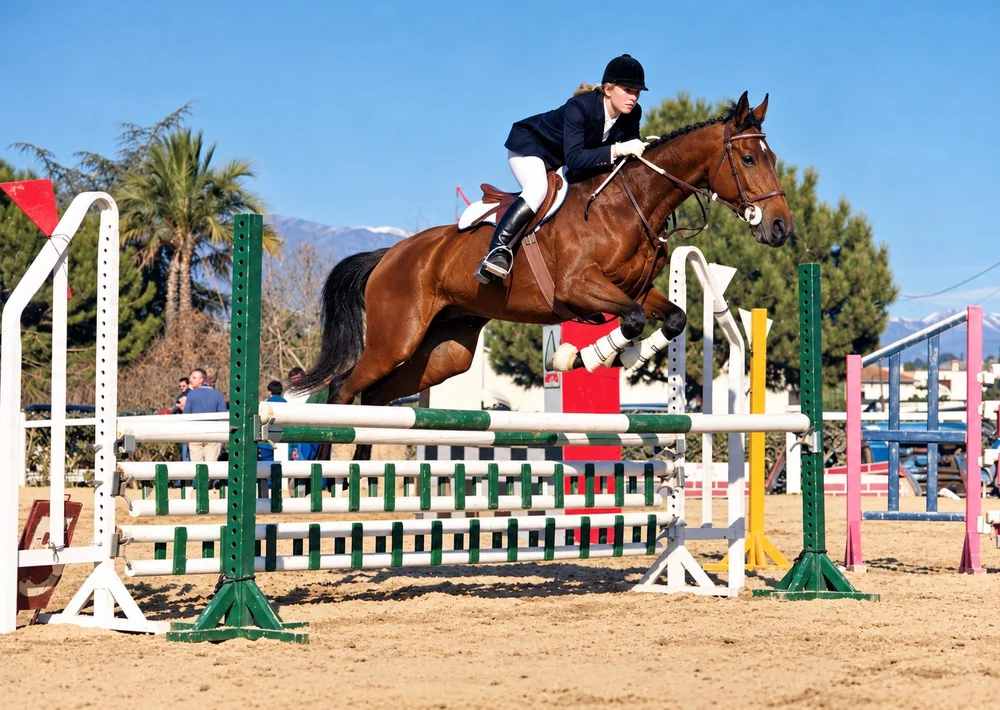
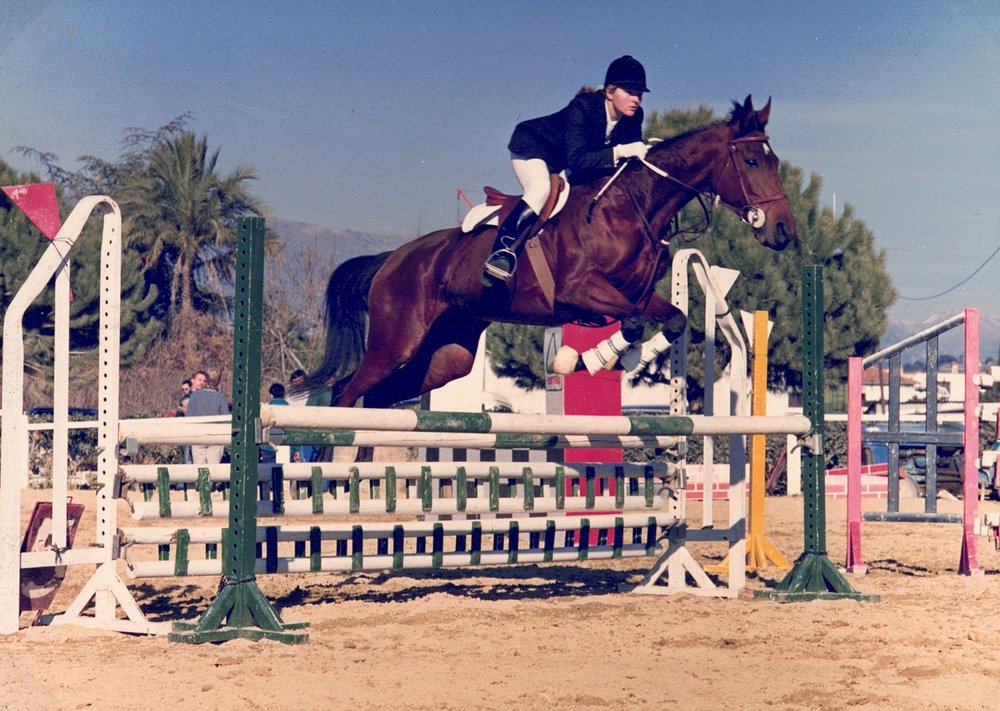
La Baule. 1989. Junior Nationals, Day 1. I had only been showing Melody in rated competition for four months. La Baule was massive, one of the three biggest arenas in France, and I was the last of ninety-six competitors. I just wanted to finish in the Top 40 so that I could pass into Day 2. When I walked the course, I was trembling inside—the fences were up to my shoulders, overwhelmingly wide and distractingly colorful. It was the first time competing on grass. Even Gérard, my hard-ass coach, softened a bit to try and comfort me. The fence in this photo was the entry to a combination. Somehow, we finished twenty-seventh. I was so happy to have made it to Day 2.
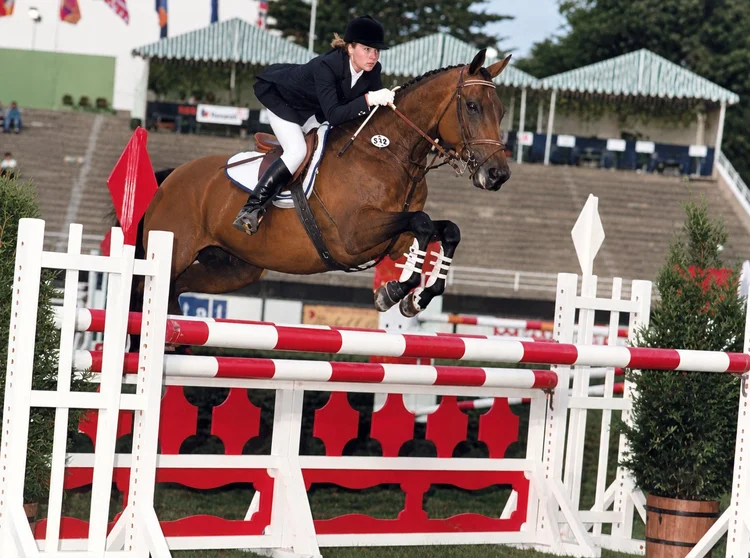
Nice. 1988. One of my first shows, a schooling show, 2nd Level. Bayonne was my first horse after ponies. She had heart, but she wasn’t a natural jumper. She lacked power through her back and hocks, and her style over fences wasn’t easy. I had to push her with every stride and convince her over each jump. But that’s the ride she needed. It’s what she taught me—that sometimes you make the jump together.
Karine’s Competitive Years
Karine’s multi-championed show-jumping and pony-eventing career spanned the French junior and adult ranks. She won multiple regional titles and national golds at 1.20–1.25m, rode in six French National Championships with five Top 20 finishes, and finished with a Silver and an overall Bronze jumping 1.35–1.45m at the French Junior National Finals that earned her an invitation from Olympic champion Marcel Rozier to join the French Junior International team.
La Baule. 1989. Junior Nationals, Day 2. Jump 1 of a triple combination. The course had the biggest jumps I had ever seen in a competition up to then. I was scared out of my mind surrounded by top international names like Michael Whitaker, Thomas Fuchs, Nelson and Rodrigo Pessoa who had competed in the previous class on the same course. I couldn't believe I was on the same grounds with them. My horse had refused this jump, but I managed to coax her over. Look at my crop!
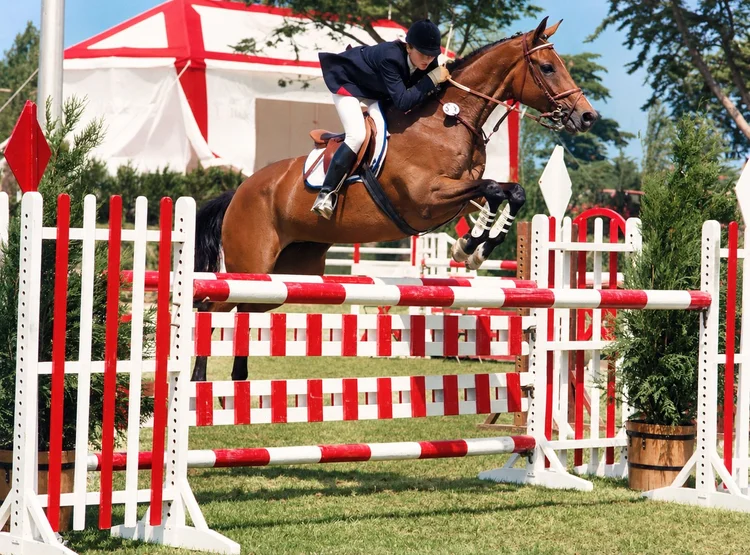
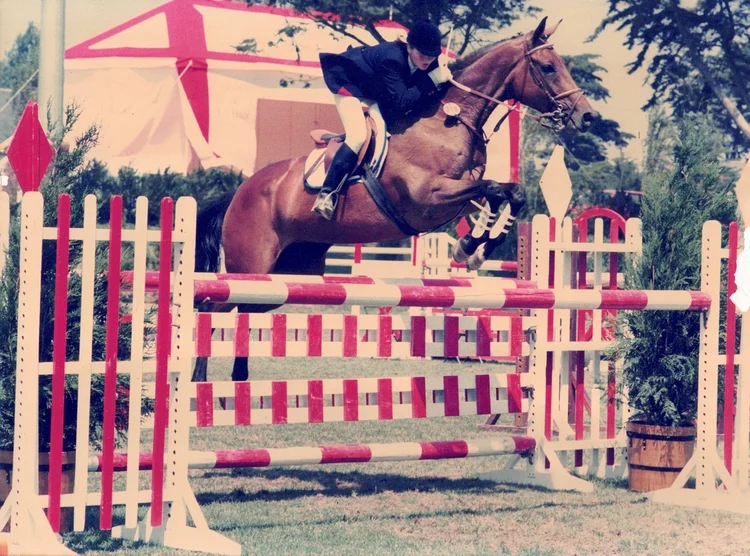
This was the last qualifier for Junior Nationals. This arena was small and uneven. Jumps were big and turns were crazy tight with very difficult line combinations. It wa a really hard class, and it was also the final junior qualifier for the French National Championships. In France, we had o qualify through our regional leagues, and only the top four riders could advance. Going into that last qualifier, I was already leading, first or second overall. I was so happy after winning this class, because there was no question that I was going to Fontainebleau for Nationals.
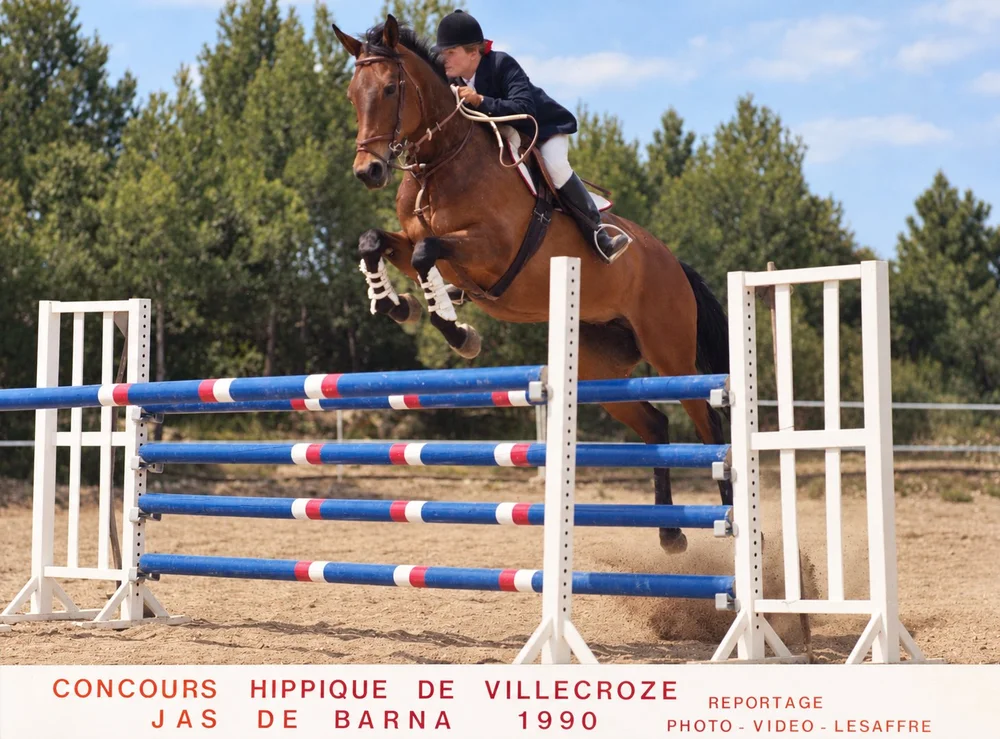
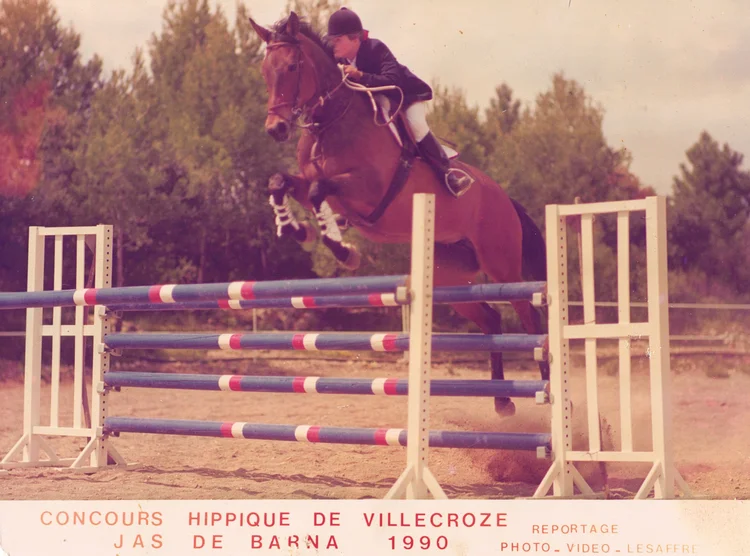
This was the first junior qualifier of the season for the French National Championships, and I really wanted to do well. It had rained. The footing was muddy and slippery. The arena was the largest in the region, and big rings like this one were often hit or miss for my mare. She could get flat over the long distances and catch the top rails as a result. I remember being pretty anxious walking the course, but it all came together. We won the class--our first win of the qualifying season.
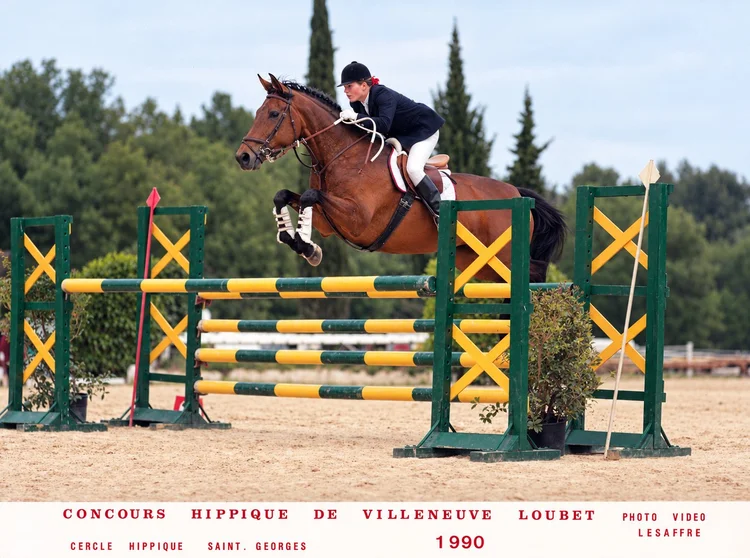
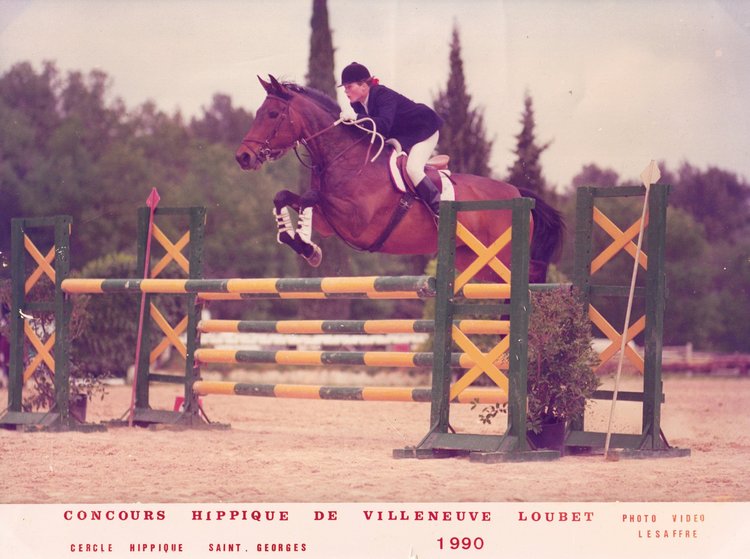
At 17-1/2 years of age and in my final year as a junior. Melody and I had qualified for France’s Critérium Junior Invitational National Championship. It was our third appearance on the national stage in three weeks. We were exhausted. During this second phase, the oxers had been widened and the fence heights were increased to 1.45 meters (just fifteen centimeters below Olympic height). I was 3rd overall going in, and the 18th out of twenty to compete. On our way to Jump 5, I had lost my focus, looking back at 4 because we rattled a rail. To my relief the rail remained, but when we arrived at 5, I hadn’t prepared Melody properly for the oxer over water. She hesitated, and we faulted. I had to let it go and ride the rest of the course flawlessly. This photo catches us over Jump 12, my eyes already on 13. We finished 2nd in the Finale and took Bronze overall. But what I cherish the most, is what happened after the ceremony. Marcel Rozier had pulled me aside and invited me to join the French junior international team.
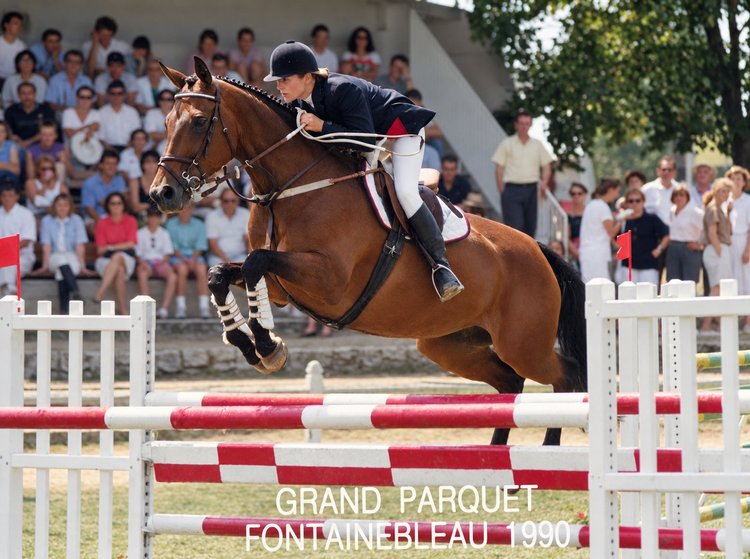
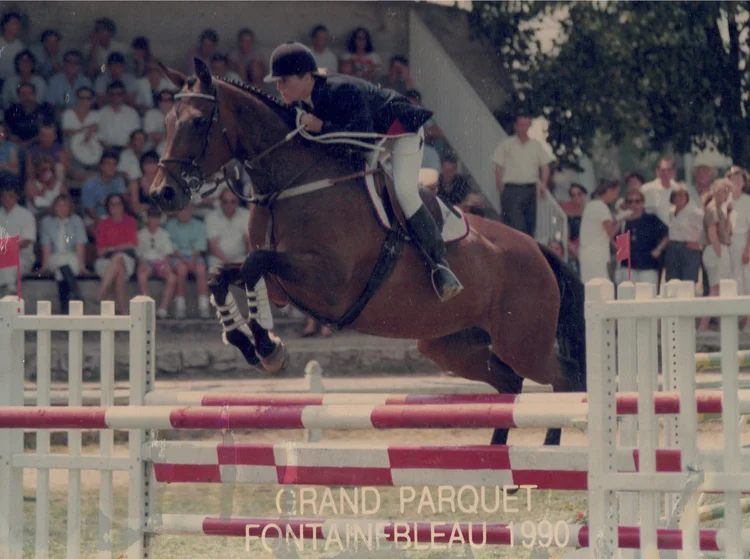
Day 3, Phase 1 of the Finals. I was fourteenth to go, sitting 8th overall, and the pressure was heavy. Third day on grass, the track was chewed up and battered and fastening cleats to Melody’s shoes was no longer an option. It was the biggest course I’d ever ridden. No shortcuts were even possible; the time was optimum, so the only way forward was precise and clean. This oxer was the entry into a triple—oxer, one stride to a vertical, one stride to another oxer, with a long lazy left turn to Jump 11. I had to set Melody up with the correct angle and with the right amount of momentum that would allow her to carry us through the triple without the line unraveling. I stayed locked in, one stride at a time, focused on position and balance. We had to be clean, and we were. We had risen to 3rd overall by the end of the Phase.
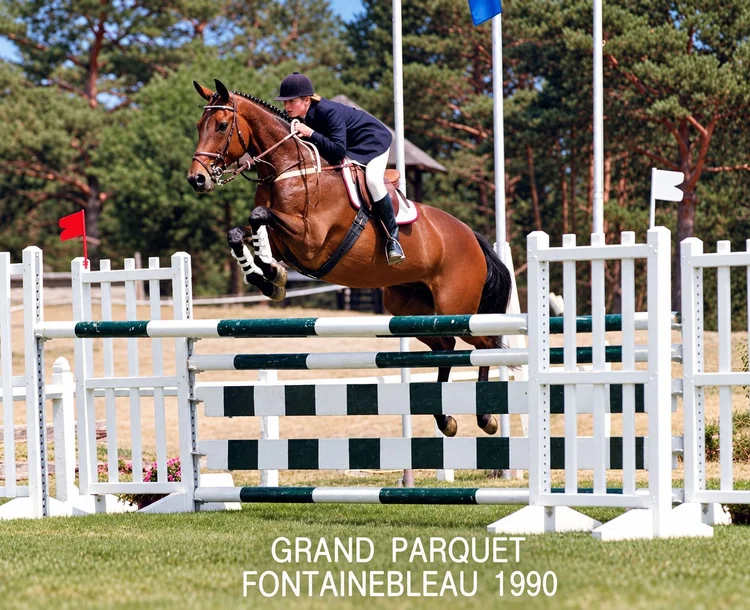
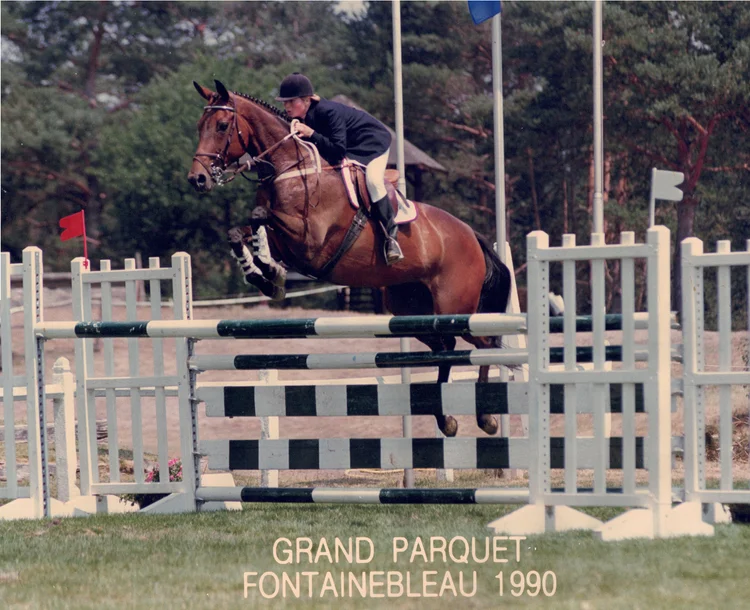
Day 2, Phase 2. With four faults from Phase 1, everything was on the line, and I needed this round clean to stay in the Top 20 in order to make the Finale. This uphill oxer demanded focus. It was a bulky obstacle at the end of a very challenging turn, and I needed to approach it perfectly, but at the same time I need to keep in my sights the next jump and its approach. This is one of my favorite photographs—I use it at the wallpaper for my phone. The sensation was incredible. She soared and floated. We cleared the round, finishing in eighth and headed to the Finale.
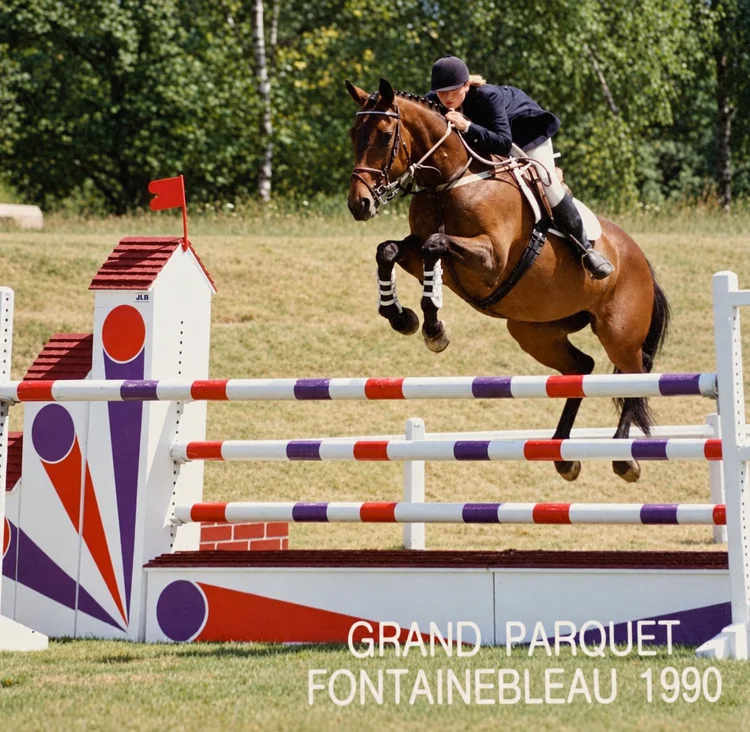
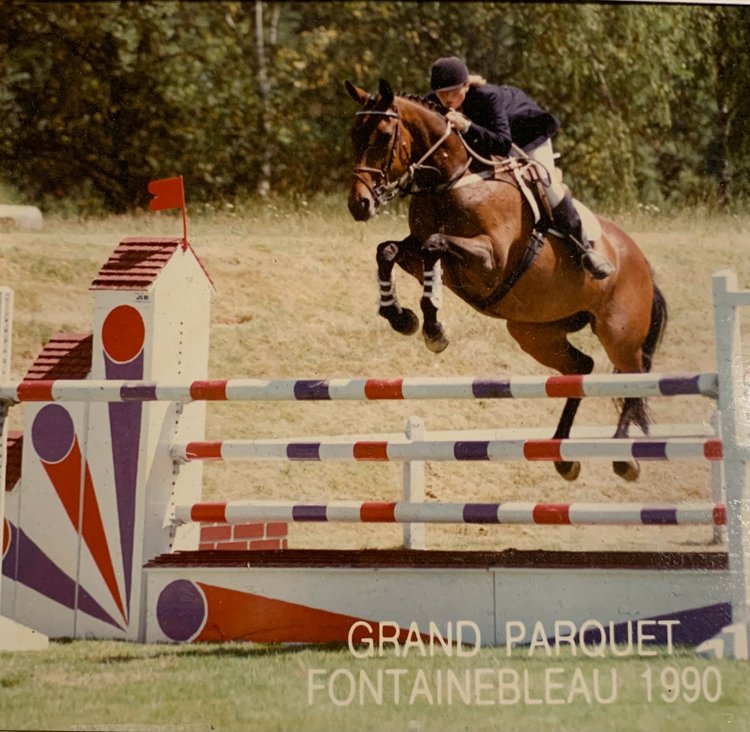
Day 1 of Junior Nationals. I knew from the previous year that Speed Class was important, but the course designer took advantage of Fontainebleu’s huge hilly grass fields to challenge the riders and didn’t give up any openings for cuts. This oxer was downhill, and I remember having to take caution with Melody through it so that we didn’t knock over a rail. I focused on a clean round more than a fast finish. I was proud. We placed 13th that day.
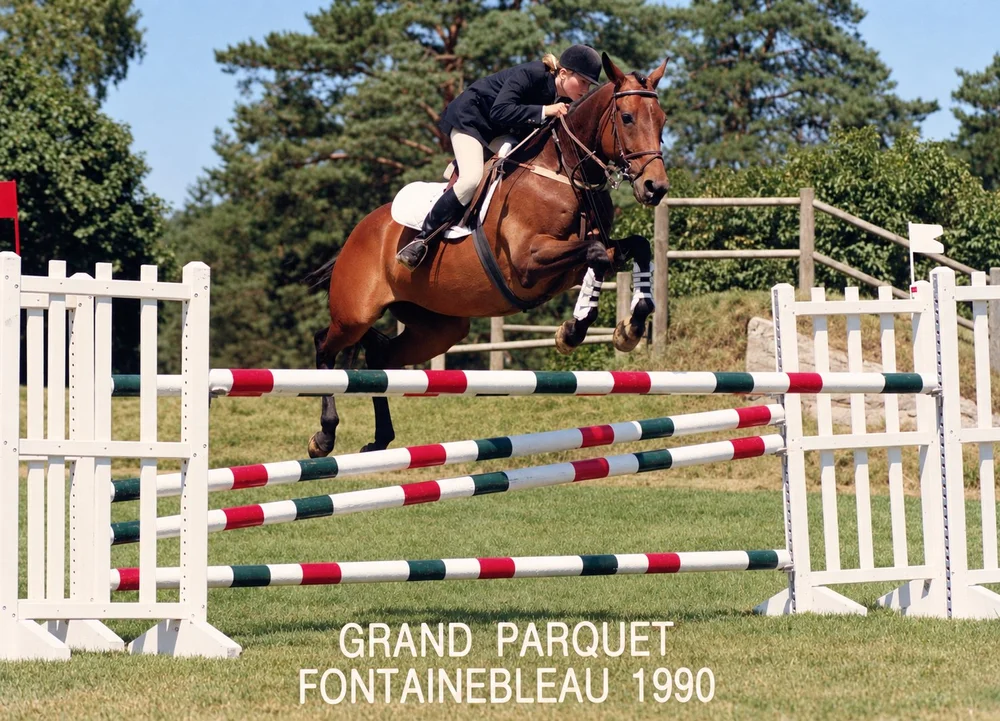
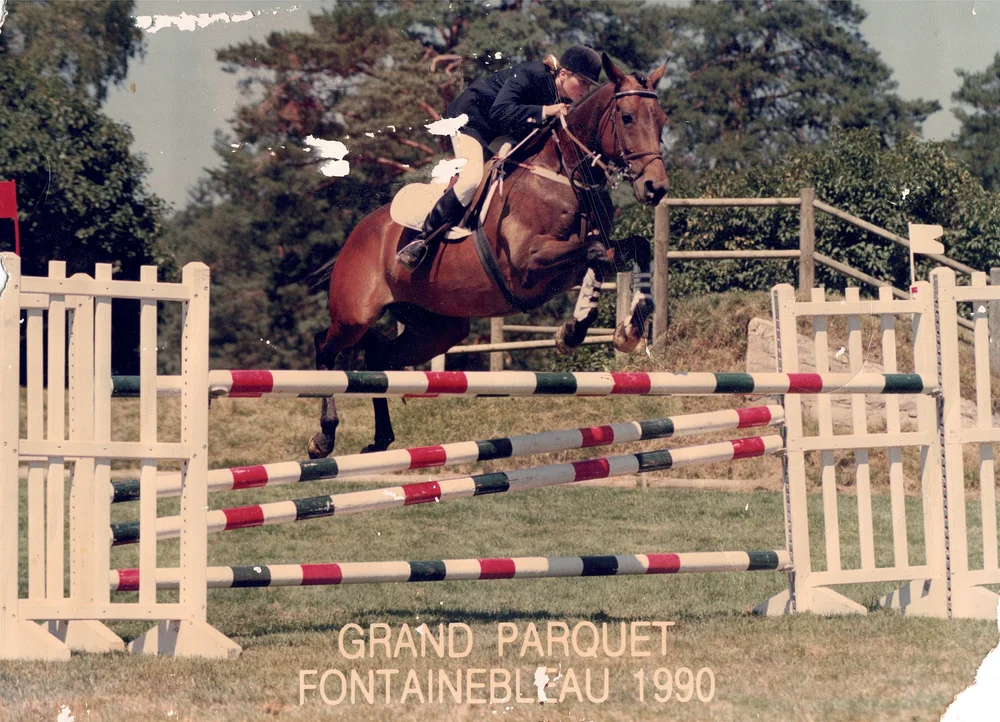
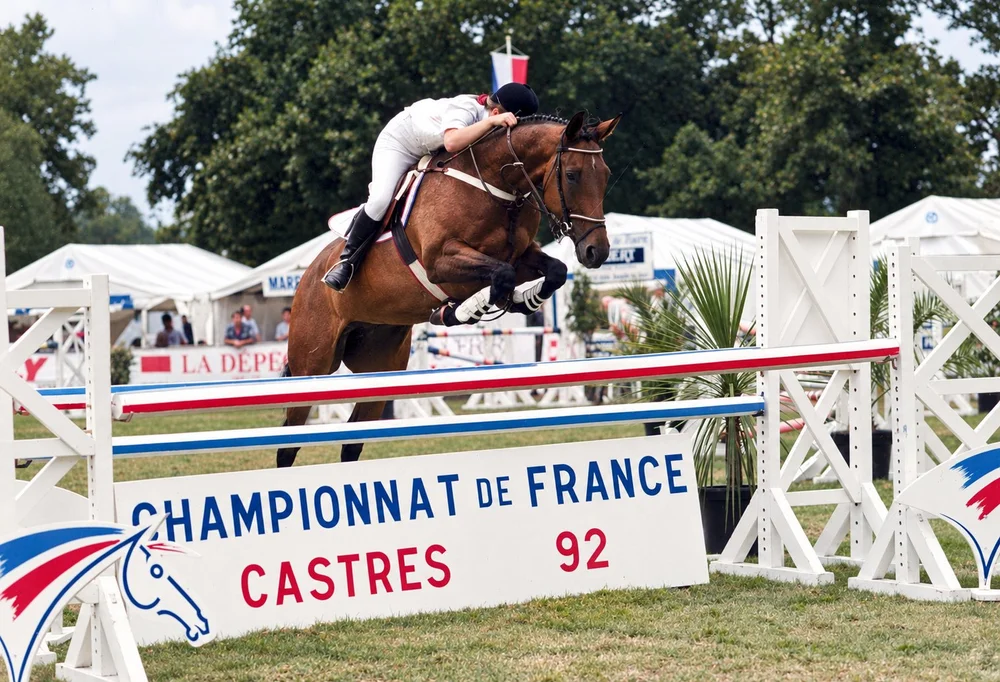
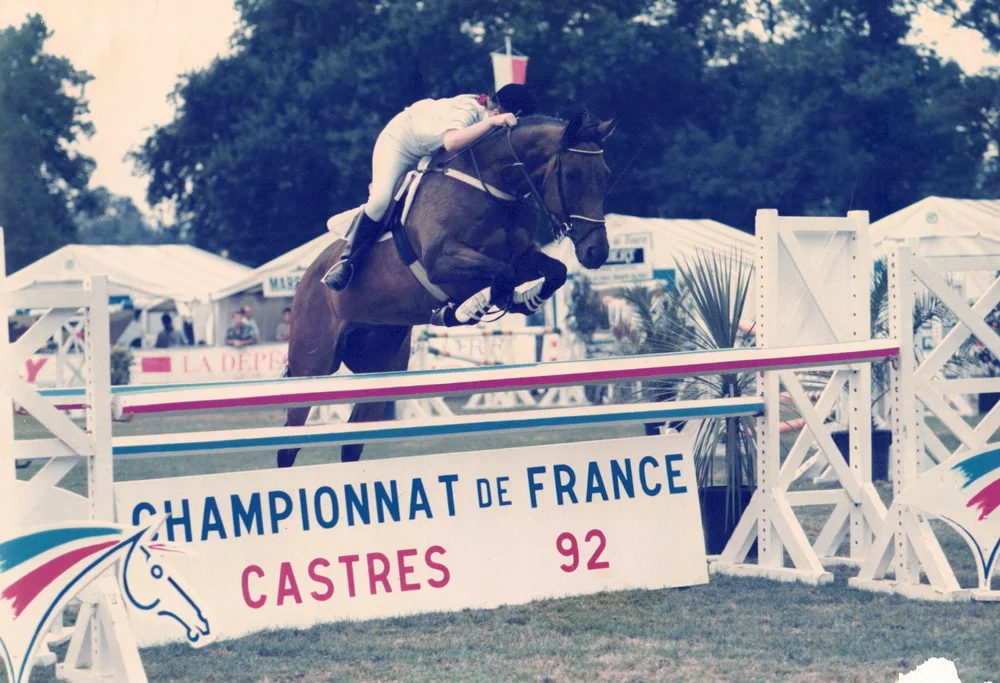
First day of Nationals, Speed Class. A dropped rail meant additional seconds on the run. Alone at the competition, I walked the reconnaissance and noticed that every jump offered inside cuts that could shorten my overall run. I took all of them—eight or nine in all. On this jump, my mare exploded and caught me by surprise. That’s why my face is buried in her neck. One rail down, but we finished in 61 seconds. Next best was 73. Perfect strangers came over afterward saying that they’d never seen anything like it. They might shave one or two lines, and especially not a few of the ones I had cut because that would’ve been borderline nuts. Winning the round put me in the lead on the road to Nationals.